
Foot Acupressure Mat: How to Use One for Your Feet
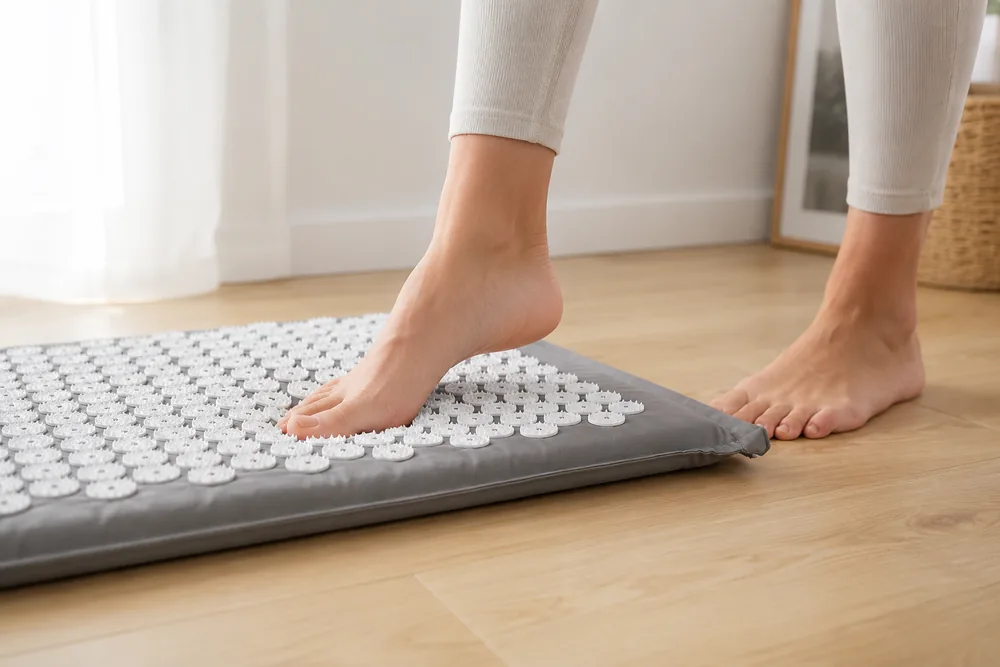
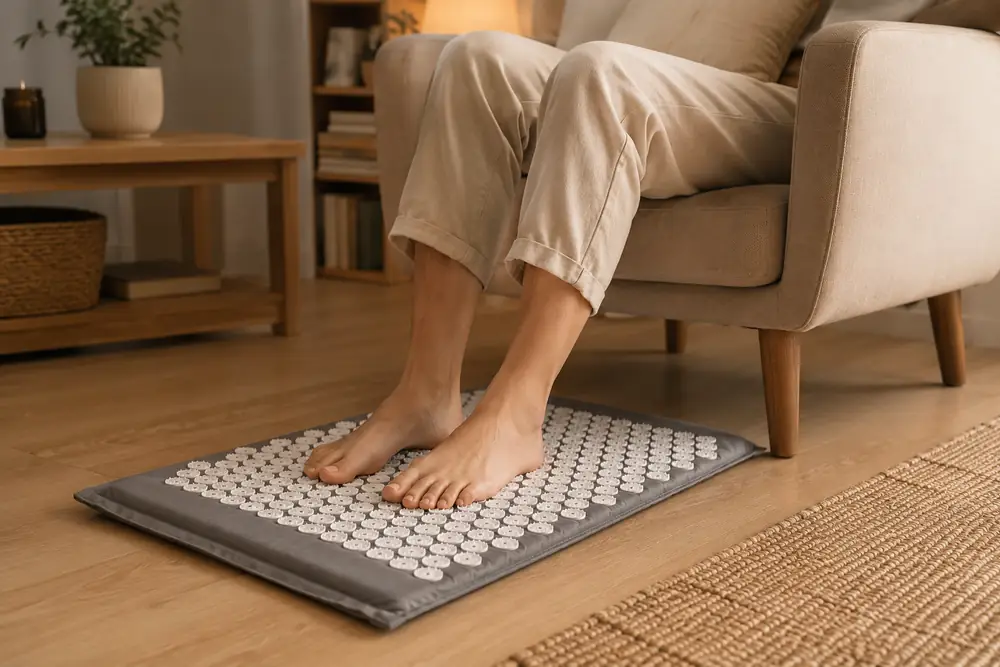
Most people picture an acupressure mat as something you lie on for your back. But the feet are one of the most popular ways to use these mats, and for good reason: standing lets you control exactly how much pressure you apply by shifting your weight, and you can do it for thirty seconds by the sink or a few minutes in front of the TV. This guide walks through the types of foot mats, how to use the SpikeRest mat standing, a beginner progression, and how to stay safe on your feet. If you want the general beginner walkthrough, our how to use an acupressure mat guide covers the lying-down basics too.
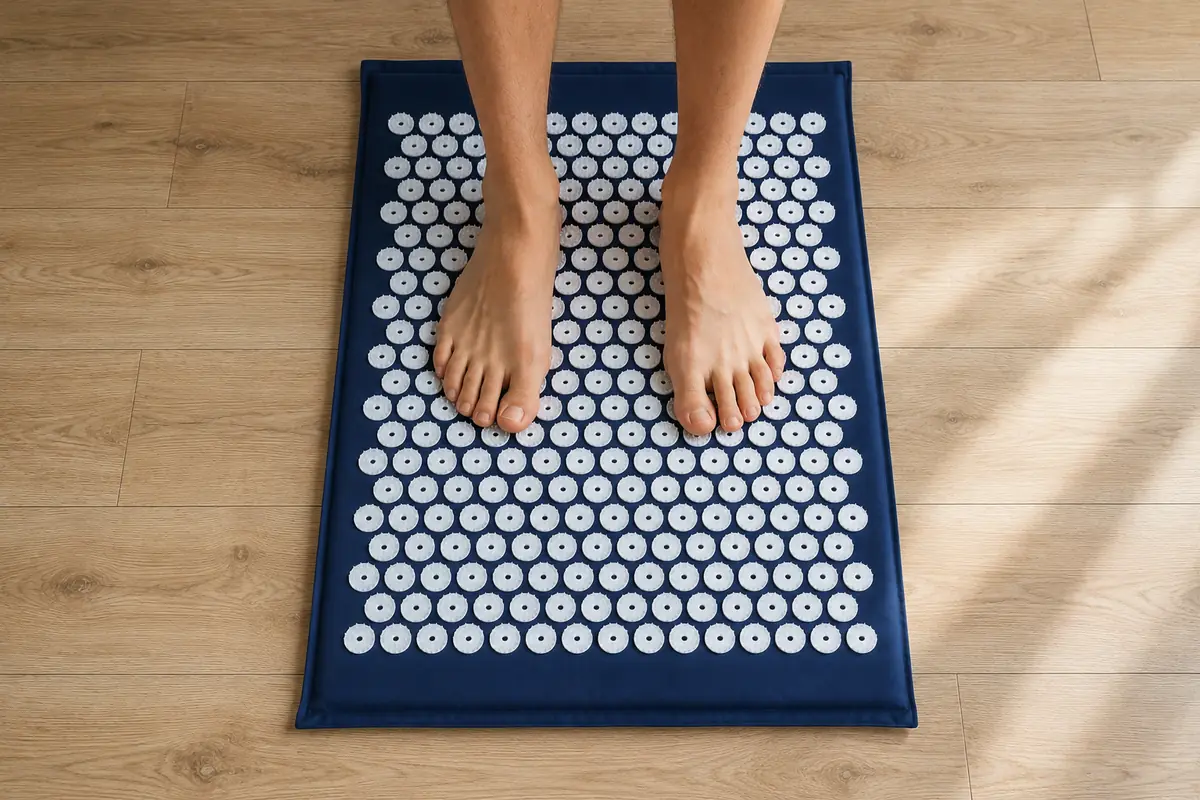
The full-size mat is what you stand on for feet · free shipping · 30-day money-back guarantee
Why the feet are a natural place to start
You do not need to believe any grand theory to notice that your feet feel a lot. Podiatric anatomy describes the foot as a compact, sensitive structure, and neurophysiology research has mapped several distinct classes of touch receptors packed into the sole. That density is exactly why the first few seconds on a spiky surface register so strongly, and why the sensation is easy to dial up or down simply by leaning more or less of your weight onto the mat. Standing also gives you a built-in exit: you just step off. Compared with lowering yourself onto a mat and back up, that makes the feet a low-commitment way to get familiar with how acupressure-style stimulation feels.
of low-threshold touch receptors densely innervate the human foot sole, making it highly sensitive to textured pressure
— Journal of Neurophysiology (American Physiological Society), 2018
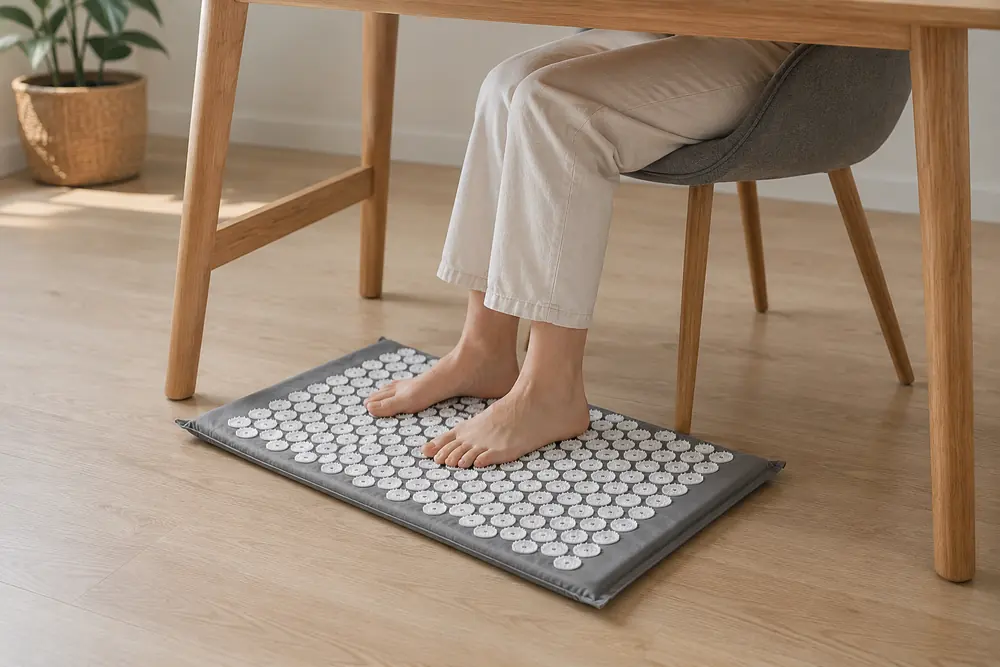
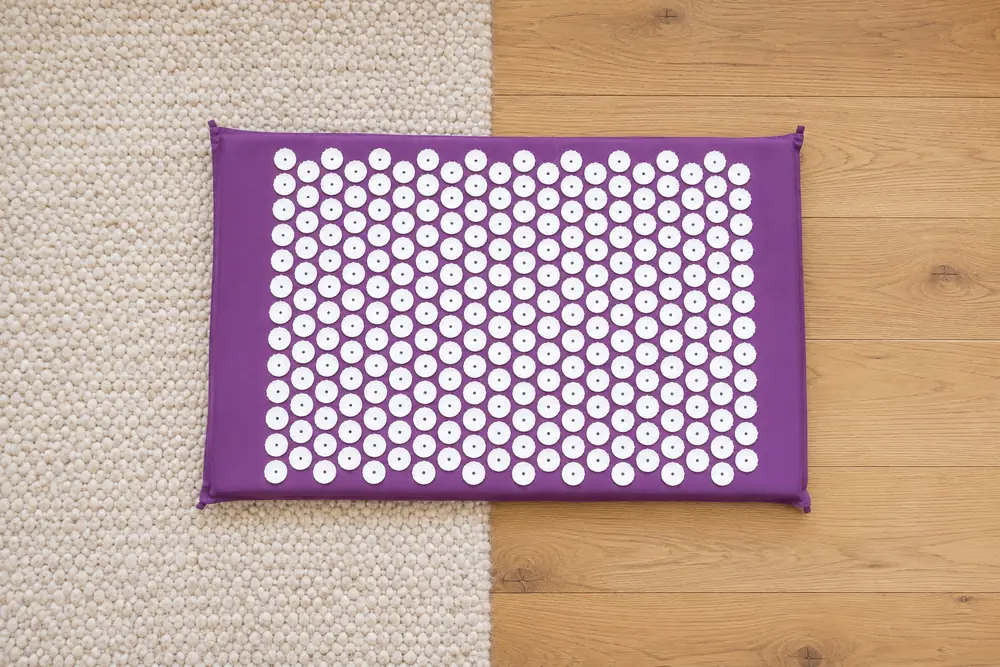
SpikeRest mat surface — a compact format that covers from the neck to the lower back, and comfortably fits two feet side by side when standing
— SpikeRest product specs, 2026
verified buyer photos on record for the SpikeRest mat set, rated 4.9/5 average
— SpikeRest order records, 2026
Types of foot acupressure mats compared
People shopping for "a foot mat" often find three very different products under the same search. Knowing the difference saves disappointment. The table below lays them out honestly, including the trade-offs.
| Type | Surface | Feels like | Best for | Trade-off |
|---|---|---|---|---|
| Classic spike mat (what SpikeRest makes) | Many small plastic disks with fine pyramid points on a padded cushion | Sharp for a few seconds, then a warm, even prickle | Standing on your feet and lying on your back, neck, shoulders | 66 cm stays out where you use it, and rolls into its bag |
| Dedicated TPE foot pad | Large rounded rubber nodules, sometimes with embedded magnets | Deeper, blunter pressure points underfoot | Feet only, bathroom or shower-mat style use | Single-purpose; you cannot lie on it |
| Reflexology stone / pointed-tile mat | Hard river stones or rigid molded points | Firm and unforgiving, no cushion give | People who want maximum intensity while walking in place | Can be too harsh for beginners; no padding |
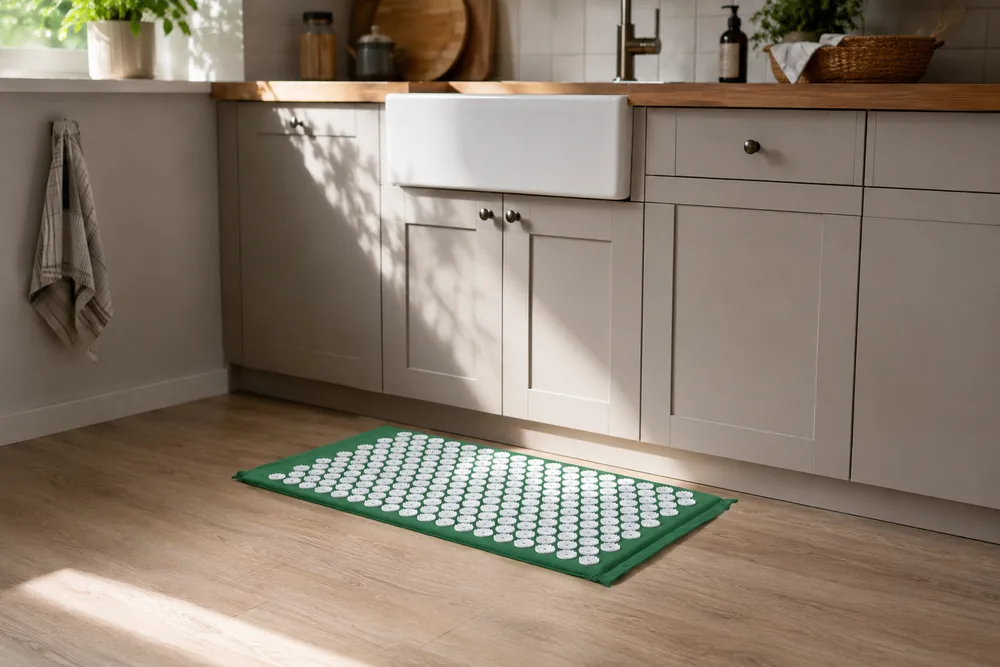
The SpikeRest mat sits in the first row: it is a padded body mat, which means standing on it for your feet is a genuine, intended use — you get the underfoot sensation, and the same mat lies flat for your back later. That versatility is why we build the range around it rather than a feet-only pad. If you are weighing specific brands and price points, our best acupressure mat comparison breaks down where each option wins.
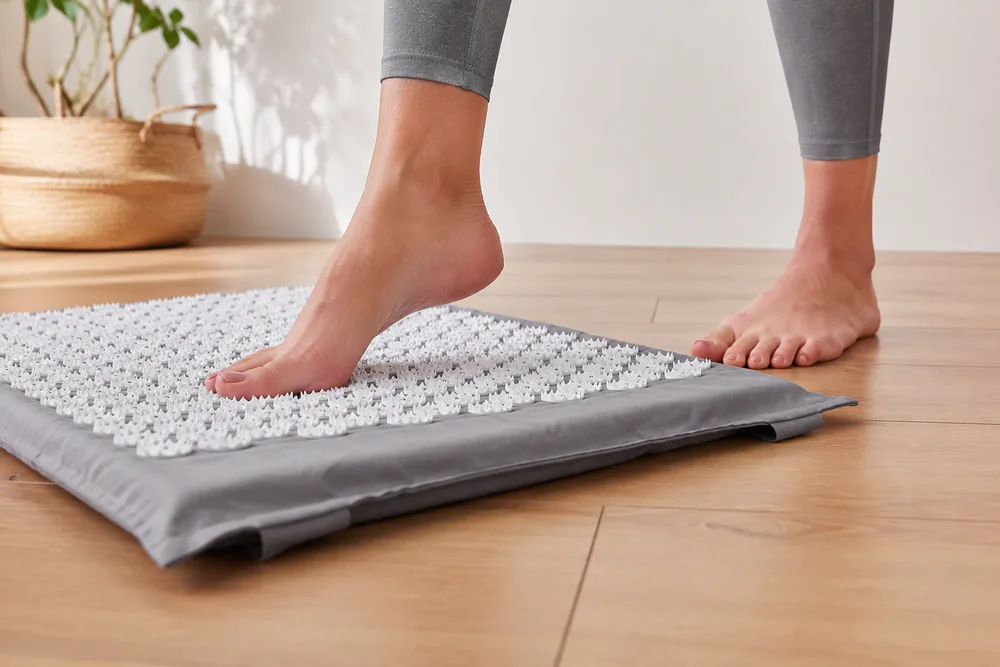
How to use the SpikeRest mat standing, step by step
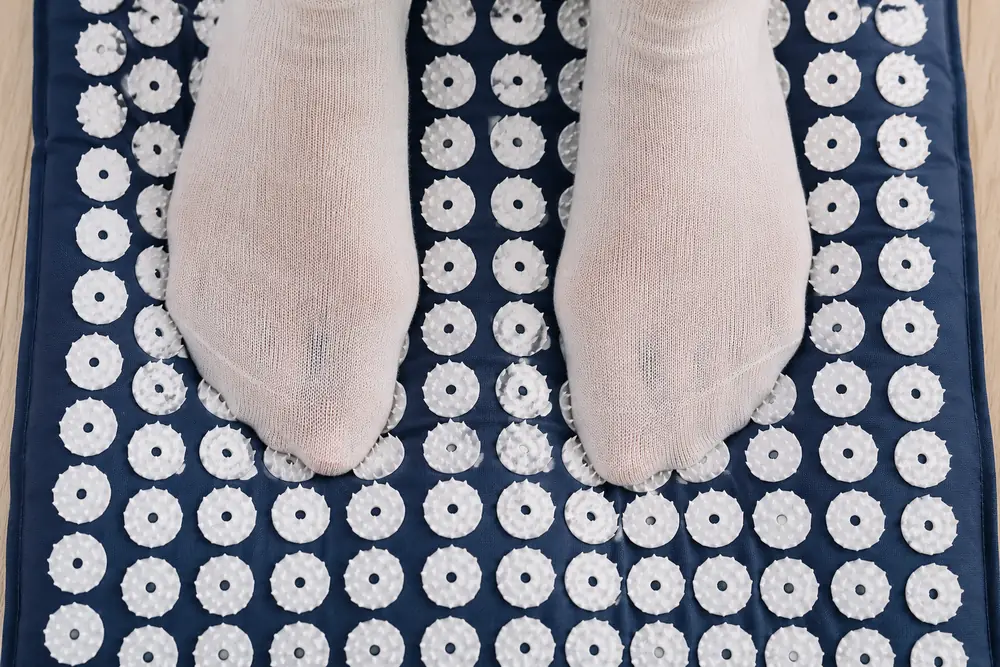
Standing is the simplest way to use any acupressure mat for the feet, and it is exactly how several of our buyers use theirs — one of our most-shared customer photos shows someone standing barefoot on the navy mat. Here is the routine we suggest to first-timers:
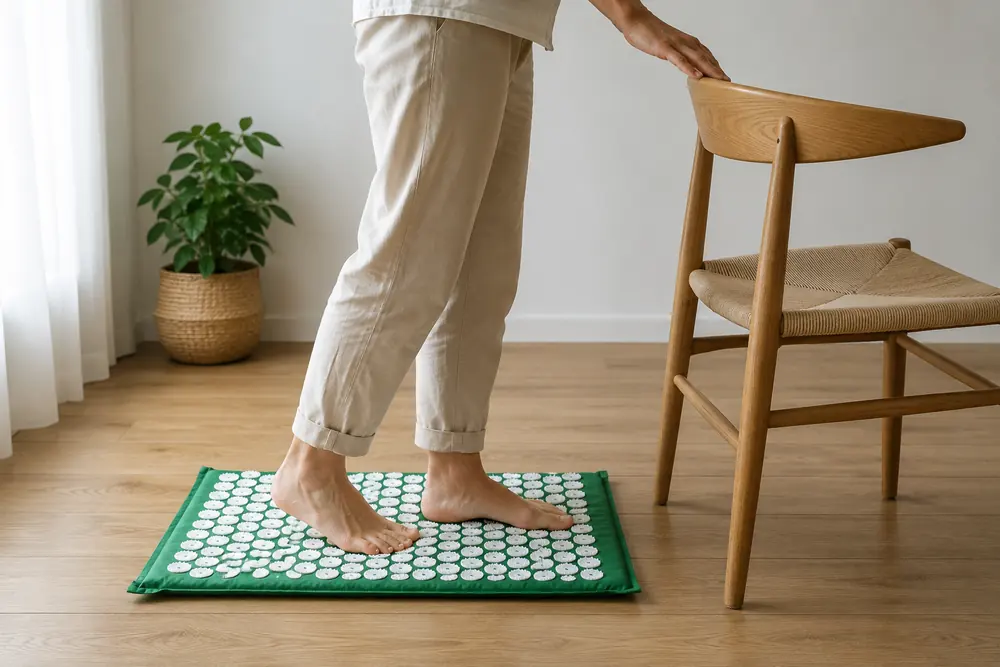
- Set up for balance. Lay the mat on carpet or a rug, or on a hard floor with a towel underneath so it cannot slide. Position it within arm's reach of a wall, countertop, or heavy chair.
- Start in socks. Socks take the edge off the first exposure. Step on with both feet, keeping your weight even rather than rocking onto your toes or heels.
- Hold on and breathe. Keep a hand on your support. Take slow breaths for the first thirty seconds. The initial intensity fades into a warmer, tingling feeling for most people.
- Step off deliberately. When your timer ends, step off onto the floor, not straight into walking. Give your soles a few seconds to readjust.
For a fuller sensory walkthrough of that very first attempt, our first acupressure session guide describes what to expect minute by minute.
How we test the standing progression. As part of our routine at how we test, our curator Maya Ellison ran timed standing sessions on the SpikeRest mat across all four colors, socks first then barefoot. The pattern was consistent: the socks-on phase felt manageable within about 20 seconds, while bare feet took closer to 45–60 seconds before the sharp initial phase settled into a steady prickle. We use that observation to set the beginner timings below rather than copying generic advice.
| Session | Footwear | Suggested time |
|---|---|---|
| Days 1–3 | Socks | 30–45 seconds |
| Days 4–7 | Socks, then a barefoot try | 60 seconds |
| Week 2+ | Barefoot | 2–4 minutes, as comfortable |
A gentle beginner progression
The mistake beginners make is treating intensity as a badge of honor. It is not. The goal is a sensation you would happily repeat tomorrow. If bare feet feel like too much on day two, go back to socks — that is progress, not failure. Many people settle into a comfortable rhythm of a couple of minutes most evenings as part of winding down. If you are curious about the evening angle specifically, our guide to using an acupressure mat before bed covers how people fold it into a calm-down routine, and our acupressure mat benefits page reviews what the research does and does not say.
Staying safe on your feet
Balance is the main thing standing use adds over lying down. Always keep a wall or chair within reach, use the mat on a stable surface, and never step on if the floor is wet or the mat can slide. Beyond balance, the same general cautions apply as with any acupressure mat.
Wellness disclaimer: SpikeRest mats are wellness products, not medical devices. If you have a medical condition, reduced sensation in your feet (for example from diabetes or neuropathy), broken or irritated skin, are pregnant, or take blood thinners, talk to your doctor before use.
Back to the SpikeRest mat · About us
Who tested this

Maya Ellison · Wellness Product Tester & Curator, SpikeRest
Maya tests every mat on her own evening routines — timed sessions, one color at a time — and turns down more references than she approves. She ran the standing foot sessions behind this guide herself.
Reviewed and updated July 4, 2026. See how we test.
Foot acupressure mat FAQ
Can I use a regular acupressure mat for my feet?
Yes. Standing barefoot on a full-size acupressure mat like the SpikeRest mat is a common way people target the soles of the feet. You simply place the mat on the floor and step onto it, holding a wall or chair for balance. Start with socks and short sessions, then progress to bare feet as the sensation becomes familiar.
Is a foot acupressure mat different from a body mat?
They overlap. Some mats are shaped as small oval pads with rounded TPE nodules made specifically for feet; a standard body mat uses many small plastic disks with fine points. Both let you stand or press your soles against a textured surface. The body mat is more versatile because you can also lie on it for your back and shoulders.
How long should I stand on an acupressure mat with my feet?
Beginners often start with 30 to 60 seconds and build toward a few minutes as it becomes comfortable. There is no fixed rule. Many users keep foot sessions short and stop the moment anything feels sharp rather than warm. Always stand near a wall or sturdy chair so you can step off easily.
Does standing on an acupressure mat hurt?
The first few seconds usually feel intense — that is normal and expected. Most people describe it settling into a warm, prickly, tingling sensation within a minute or two. Bare feet feel it more than socked feet, which is why starting with socks helps you ease in. If it ever feels genuinely painful or sharp, step off.